Articles

Affichage des articles associés au libellé TITE_EN

Sieg!

Image
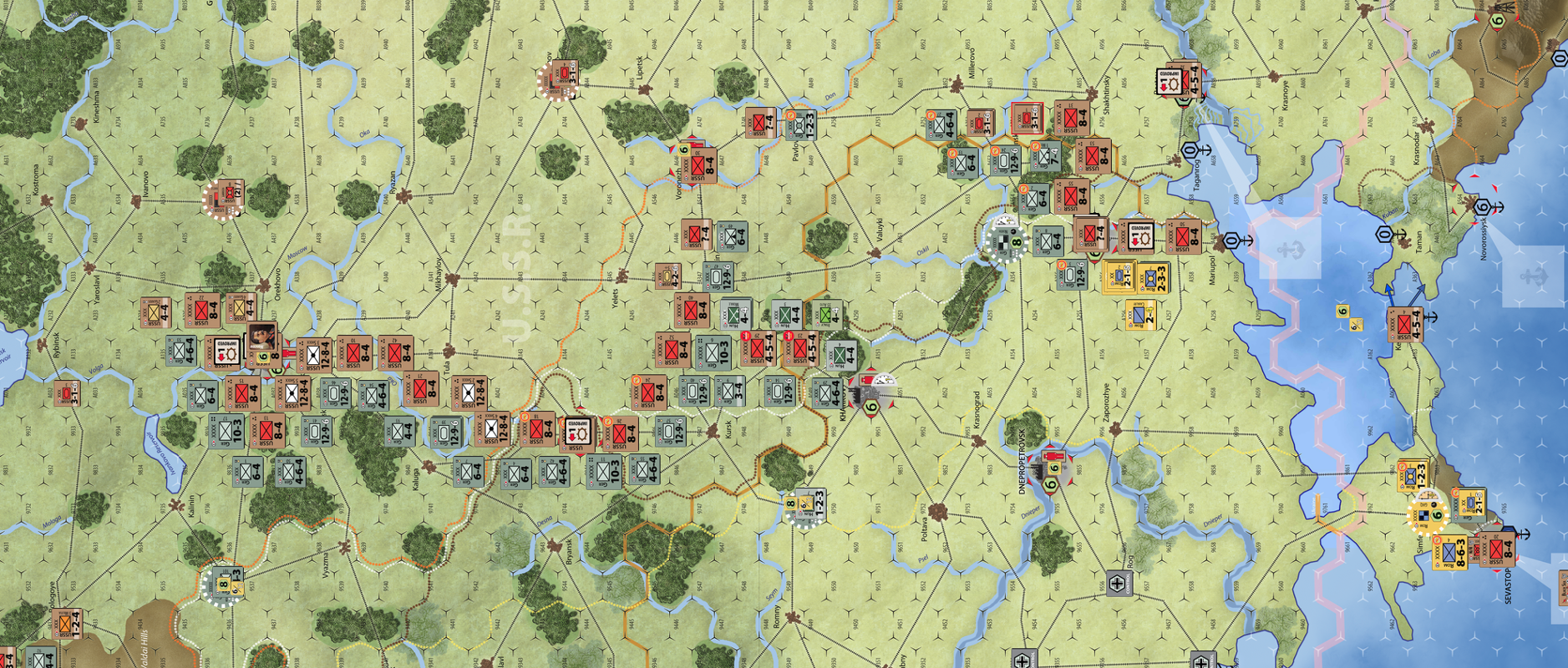
 Sieg! The sun shines relentlessly on the Russian steppe.  The Axis plays its "Major Offensive" card, combined with the "German Generals" card. This gives it two potential shift columns when attacking in range of HQ support. This is a major advantage that can be sustained in subsequent turns with offensive points.The play of these cards delivers the results of the Kursk offensive in 1943, which succeeded in making the Russians move back, although they were prepared. Here we are in 1942 with an insufficiently prepared Soviet. The front, though solid, is broken at several points. All the weight of the attack is carried in the centre. OKH reduces its forces to the maximum on the secondary fronts in the North and South, concentrating its mobile forces around Voronezh. Unable to redeploy, the Stavka order attacks towards Rostov in an attempt to relieve the central front.  It is too little and too late. Voronezh is largely bypassed from the east and the Soviet Central Fro...

Nice weather in May

Image
Nice weather in May The good days are coming back. The tits are chirping and so are the T34s. The Russians infiltrated in the north are cleaned up by an ad hoc panzer group. On both sides, there is a desire for offensive. Violent fighting break out in the centre of the front. Tula is taken and then freed by a powerful counter-blow which volatilizes an infantry corps. The HQ South is driven out of the advanced positions it occupied and forced to withdraw north of Rostov. Chances of taking the city are increasingly slim. The majority of Soviet reinforcements are concentrated in the south and in Stalingrad. Axis troops are outnumbered there. In the air, the Luftwaffe organises a major offensive. Soviet airfields are hit relentlessly, trying to repeat the exploits of 1941. Alas, the VVS is present in numbers and patrols. The results are mixed: the skies remain neutral, both sides having invested all their means in the action. The sun continues to shine and both sides attacks at the same ti...

War in the mud

Image
 War in the Mud   April and the beginning of May 1942 were particularly rainy. The dreadful weather brought the fighting to an almost total halt. Both sides lick their wounds  . The Wermacht recovers from the losses suffered during the winter. New young soldiers replace the veterans lost at the end of 1941. The Red Army continues its modernization: T34 brigades swarm on the front.   The action will concentrate on three sectors: -in the vast no-man's-land between Bologoye and Kalinin, two infantry units slowly advance towards the Northern HQ. It would take them a month to reach the Germans. The effect of surprise was meagre. -Rostov and the Don line saw the rare battles of this month. Supplies are limited in the area. The OKH moves the HQ South to Morosovskaya, between Rostov and Stalingrad, considering an offensive to the south or east for the coming summer. Most of the Russian reinforcements are dedicated to this area, with a small concentration of forces available ...

A winter in Russia

Image
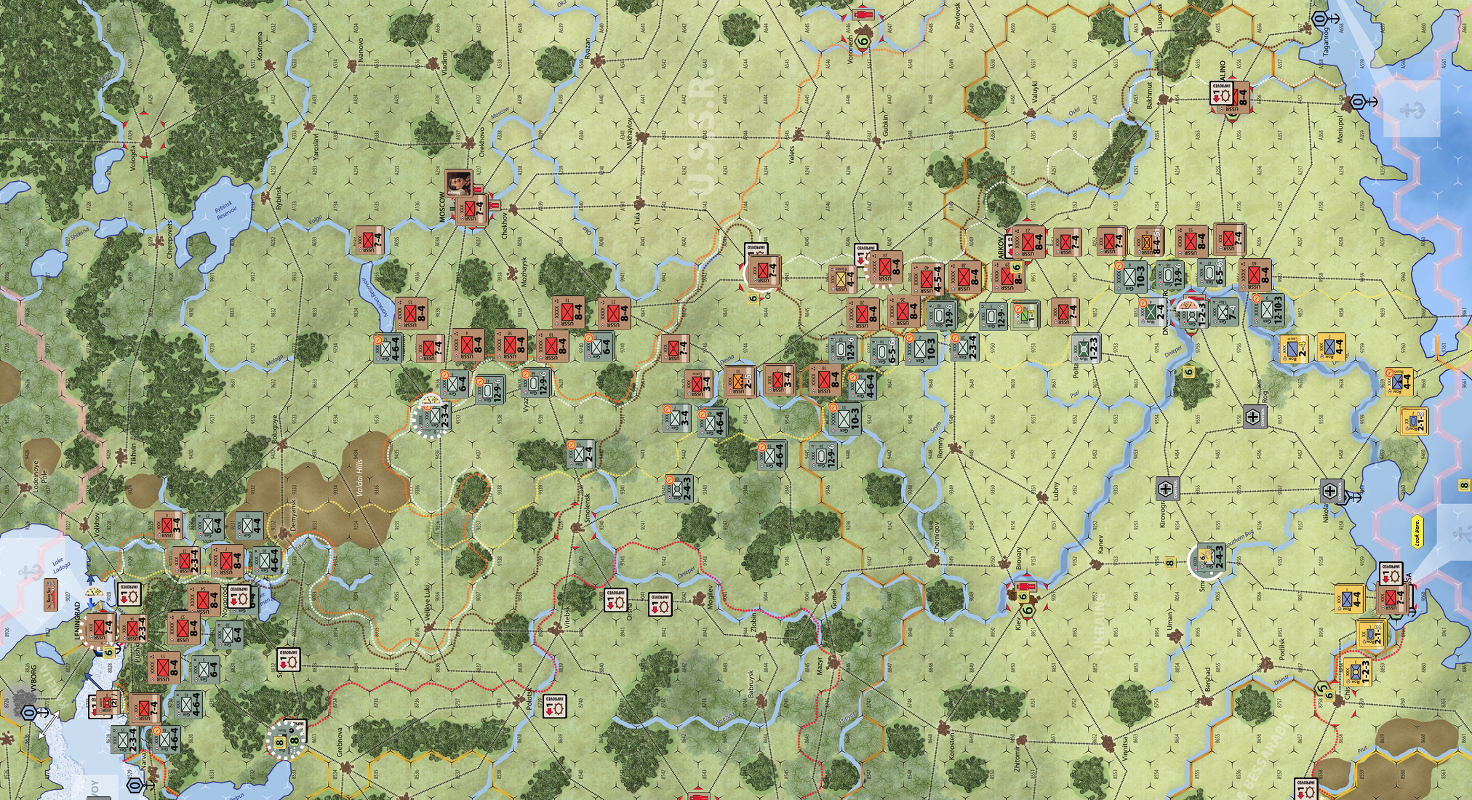
 A winter in Russia The new year brings blizzards, which do not weaken. Faced with a lack of personnel, the Luftwaffe of big Göering is being slimmed down by redeploying support staff to the front line. Likewise, foreign volunteers are called in. Several sectors of the front line have only half-strength units, which will not be reinforced for lack of personnel. The maintenance of the panzers is for the moment assured, they lack nothing. Bad time for infantrymen! The forces massed towards Sebastopol are redirected by train to Voronezh. The great Black Sea port will not be attacked in winter. In the Leningrad sector, the front is still static. The Moscow front is receding by several tens of kilometres. It is only towards Voronezh that sporadic fighting breaks out and sees the destruction of a Soviet army. Both fighters, exhausted, search for their breath and take advantage of the bad weather to take a break.  The month of February see a (relative) rise in temperatures. Snow has ...

In the shadow of Napoleon

Image
In the shadow of Napoleon November and the mud come to calm the German fervour. Little movement and fighting. The Wermacht  slowly absorbs the pocket in which four armies are struggling. The Russian desperately tries to get out but the German curtain is too strong. In Crimea, the Romanian HQ takes advantage of a nice winter season and the absence of enemy to prepare the siege of Sevastopol. This one promises to be difficult, it will surely be necessary to wait until 1942 to seize the strategic port on the Black Sea. The only Soviet offensive action is in the no-man's land between Kalinin and the Valdaï Mountains. A few corps timidly venture there to try to threaten the GQ North which is supplying the attack on Moscow.  This offensive is slow, the weather and the absence of air support preventing any proper gain. The end of November see an unexpected thaw. The sun shines again on the north of the USSR. It won't be back for another three months, so  the german is going to m...

October 1941

Image
   October 1941   The USSR has been fighting for its survival for 3 months, the Red Army is beginning its transformation. The mechanised corps, too heavy to manoeuvre, are disbanded and replaced by armoured groups. Five shock armies are set up. With improved offensive means at their disposal, they will be the spearheads of future counter-attacks. Nevertheless, the situation is bad for Russia. The front is not continuous. Two gaps exist, where neither side can afford to send troops. On the other hand, they allow the German troops, who are more mobile, to surround their opponents. Everything depends on the weather. To help the Soviet side, an event card allows a weather reroll   in autumn or winter. This guarantees a minimum of bad weather in Russia (we will see later what happened).   The first week sees the arrival of a cloudy front over the north of the country. The German progresses around Moscow and Kharkov. Two infantry corps are withdrawn from the fron...

September 1941

Image
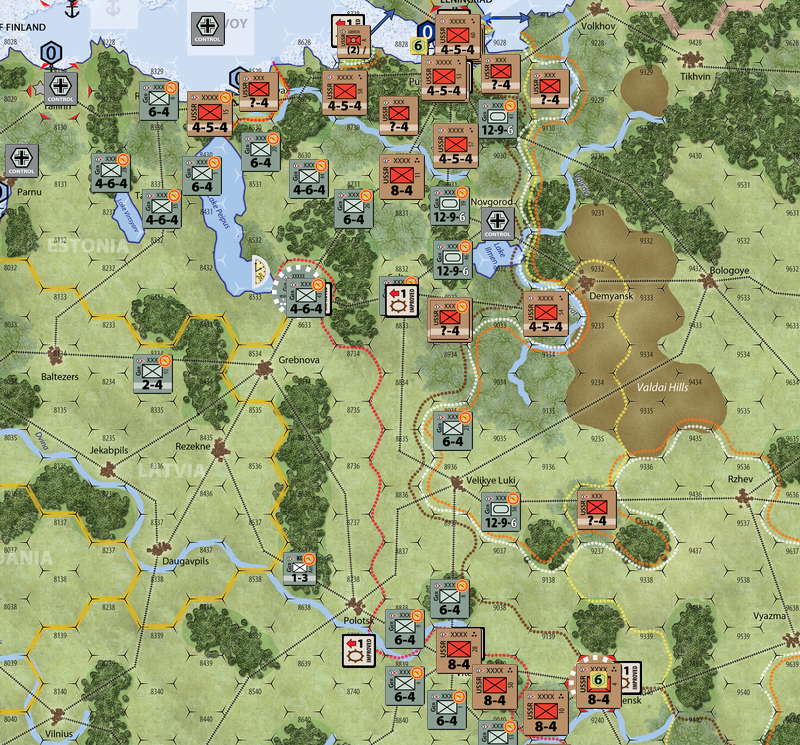
September 1941 One month of good weather is left to the Wermacht to bring down the USSR. On the battleground, it is clear that things are not going smoothly. The GA North is stuck in the marshes and forests of Leningrad. In Berlin, more offensive action in the area is being considered. The orders are to bury themselves and wait for the situation to unblock further south. In the Moscow sector, supplies are still low. The Russian has formed a solid line with six complete armies. Here again, nothing could be done in the immediate future. Finally on the Orel - Stalino line, the Red Army is present in numbers. Everywhere, the lack of supplies prevent progress.    The German offensive is going in two directions. Against Moscow, two panzer armies are concentrated which would eventually break through the Russian front thanks to their shock power. The second objective is Kharkov. The mobile troops from the south are going to infiltrate around the city, trying to cut off its supplies. I...

The grey tide

Image
 The grey tide The month of August will be a period of suffering and doubt for the Red Army. How far back? Should it abandon the towns or hold on "whatever it takes"? The decision taken is to hold on to the North while giving up on the other fronts. From 7 to 21 August, the Soviet army retreats, hampered by its lack of mobility. The infantry in zoc at the beginning of the turn cannot move in the special movement phase; the German game consists of sticking to the frontoviks to prevent their move. With 4 hexes of retreat per turn, it becomes easier to catch them and then surround them.  German side is confident at the beginning of August: the Russians in full discomfort abandon the course of the Dnieper to run like hell towards the east. They left behind several sacrificed units that are going to act as fixation points, avoiding a too rapid German exploitation. To the north, Smolensk is left to itself, Moscow needs protection. In the centre, the still solid Russian line recedes...

Russian difficulties

Image
 Russian Difficulties   We had left the Russian reeling. The Stavka decides to leave Odessa to its fate. The city will stand on its own, supplied by the sea. The majority of the available reinforcements are assigned to Leningrad, to the detriment of the other fronts.      What I find worrying is the lack of units facing Moscow. There is no link between Novgorod and Smolensk. We find the same type of hole in the south of Ukraine. An attack is being launched on the panzer division closest to Leningrad. Surrounded on all sides, it succeeds in disengaging without losses, thanks to the ability of the armoured tanks to ignore the first retreat hex in enemy Zoc.     As August begins, German railway movements intensify between the Northern and Southern fronts. Several infantry corps are withdrawn from the GA Leningrad to be assigned to the GA Dnepropetrosvk One of them receives brand new trucks: the German army is motorised. This costs a few points of equipmen...

The July Crisis

Image
 The July Crisis It has been a month since war was declared. German troops are advancing everywhere except in the center. Relying on the Dnieper, the Red Army has re-established its position, which is gradually being built up. Only the wings are a cause for concern. In the north, the breakthrough of Velikye Luki threaten Smolensk, Moscow and Leningrad. In the south, only the lack of supplies slow down the panzers.  Help for communism finally comes from the sky. Everywhere in Russia, summers storms break and stick to the ground the German planes which cannot support the attacks any more. It is a hard blow for the axis. Without ground support, it is difficult to exceed a 3 to 1 ratio. Combined with the lack of supply of two thirds of the front, this will spare Soviet blood.  In the north, the Germans approached Leningrad. In the center, they stick to the Vitebsk - Kiev line. Only in the south did a large-scale movement begin to encircle Odessa. The supply of the Romanian HQ...

Second Lesson

Image
Second Lesson The monthly phase begins with the perception of reinforcement and resources points. With the announcement of the Soviet income, the German understands that the war will be long. A card or two is also selected for each side. We both choose one card of great influence rather than two smaller ones. The initial German situation is not bad. To capitalise on it, I use the "German Generals" card which allows to keep two HQs in offensive mode for free. This way, the armoured spearhead will remain in supply at the end of the turn. In the Special Movement Phase, the Centre HQ takes up residence in Sarnov, Ukraine. It is ideally placed for an offensive on Kiev. However, it will have to wait three turns before it becomes operational again. The air phase saw the Ju88s bombing the Ukrainian railway centre with some success. Four stacks were left without supplies and the Russian lost one point of rail capacity. The result is subject to chance but in this case it...

Thunder in the east - New beginning

Image
 Thunder in the east - New beginning After our attempt at Barbarossa was aborted due to German shyness, we decided to relaunch a game and while we were at it, the whole campaign.  Having published on the forum of https://www.watchword.biz/eto-support about this game, I received a lot of interesting information from American grunts. And finally, Mr. Gerald Johnson and Mr. Alan Emrich have offered to attend our game live.  After adjusting our watches (we mix a lot of time zones, from Los Angeles to Limoges), we present our beginner's deployment.  With a lot of tact and courtesy, our teachers give us precious advice.  Something that doesn't appear in the scenario booklet but that we learn by carefully reading the rules: it is possible to concentrate your corps to obtain armies counters. Given the density of the starting German front, and the impossibility of attacking with more than one counter per hexside, this is very effective. You get the Schwerpunkt dear to Gu...

The End

Image
The End The Russian front is now stable. German pushes everywhere, with no notable results. The air combat resumed and it was an occasion to realize that the stukas were very vulnerable. The two available copies leave for the garage for repair. I discover the hard way that it is absolutely necessary to flatten the Soviet air force, else there will be a painful challenge to important missions. Finally, the Luftwaffe offers little support at the game level. If the Soviets aren't kept at a decent level of poverty, support for the ground units becomes scarce. Another observation is the low lethality of the fighting. At the game scale, a unit, except completely surrounded, always manages to escape to safety. Once the Russian line is established, a breakthrough must be difficult.  Let's go. Angel takes the initiative. While in the north it remains passive, taking advantage of the lack of German supplies, it organizes two counter-attacks in the south. HQ South is attacked again but ho...

In the Summer's heat

Image
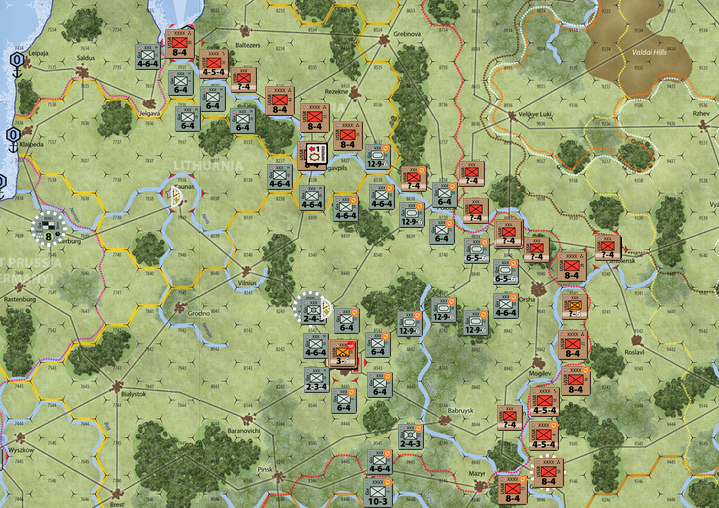
 Signal 8-14 July 1941  From our reporters on the front: the advance of german troops is now irresistible! The German panzers entered Odessa after a dash that led them from the former German-Russian border to the Black Sea. In the north, Vilnius falls as Minsk is surroundeds.  Well, in fact, progress is hard everywhere. The Russians are numerous and blocking the way. Supply is running out at the front line. I played the OKH Reconsiders card which allows to get a panzer corps immediately rather than in August 41. In the air,Soviet planes are shyly re-appearing, unsuccessfully. My initial bad turn is still paid with the Riga line that still stands.Fortunately, the Soviet center is thin.  Pravda July 8-14, 1941 Our valiant soldiers fight tooth and nail. Wherever the fascist comes, he finds a comrade to stand before him. The armored corp that took Odessa by treachery is now trapped in his conquest. A Romanian mountain corp is pushed back after numerous melee fights....

Thunder in the East - July 1941

Image
July 41  Second session last night with my partner Angel. The beginning of July is the time for cards selection. We like the system very much. Each side can develop a strategy and this guarantees the replayability of the parties, even if for the Russian, there are structuring choices. So I select the Panzerblitz card (we will talk about it later) and another one, which i keep secret for the moment because enemy eyes spy on us. German Maneuvers Medium-quality reinforcements come from Germany and two Italian units that have the merit of being there. And it is once again a wave of violence on the whole front. Only the HQ Center is maintained in offensive mode, the remaining points are reserved for other times. In the north, a Soviet army stuck against the Baltic managed to retreat in good order. Kaunas falls, Minsk and Vilnius are surrounded.  In the center, Brest still resists despite the intensive shelling of bombers. Fifteen days the frontoviks block our vi...

Thunder in the East - First Contact

Image
TITE - First Contact I will not repeat what has already been said on the web: the game is beautiful. Here, you don’t get excited about components, you comment on their use. Nor will I give you the size of the table needed to play comfortably at TITE, nor a guide to make a die tower from recycled cardboard. The Barbarossa scenario – setting up So we start small, with the iconic scenario for any game on the Russian front: June 41. No campaign rules, so. Ship management is simplified because there are none, we also won’t use partisans or reserves. We play "vanilla," as they say. Russian army is in good shape. There are people on the border. We can block entire sectors of the front. However, there is no depth. You can feel that once the curtain is pierced, the huns will run amok. The Germans are numerous, powerful and compact. There is no rule that requires attacking any part of the front, so an original strategy can be developed.   Ok, it's beautiful ...   The ...